There is a moment many women describe — somewhere in their early to mid-forties — when they look in the mirror and think: What is happening to my skin? The skin that once bounced back effortlessly now feels dry in places it never was before. Breakouts reappear like an unwelcome visitor from adolescence. Fine lines deepen seemingly overnight, and that natural glow that used to come easily feels harder and harder to find.
This is not your imagination. This is perimenopause — and your skin is one of the first places its effects show up.
The good news is that understanding why these changes happen puts you firmly in the driver’s seat. With the right knowledge and a few targeted adjustments to your skincare routine, you can not only manage these shifts but genuinely thrive in your skin during this season of life. As a licensed esthetician, I have seen firsthand how transformative it is when women stop fighting their changing skin and start working with it.
What Is Perimenopause — And When Does It Start?
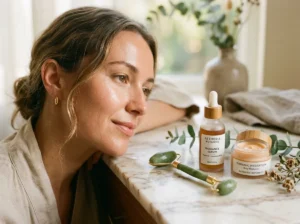
Perimenopause is the transitional phase leading up to menopause, during which the body gradually produces less estrogen and progesterone. This phase typically begins in a woman’s early-to-mid 40s, though it can start as early as the late 30s for some women. It can last anywhere from a few years to over a decade before menopause is officially reached.
Most conversations about perimenopause focus on hot flashes, mood changes, and sleep disruption. But the skin — your body’s largest organ — undergoes some of the most visible and least-discussed changes of all. Estrogen plays a central role in skin health, influencing collagen production, moisture retention, wound healing, and even sebum regulation. When estrogen levels begin to fluctuate and decline, your skin feels every shift.
How Perimenopause Changes Your Skin
No two women experience perimenopause identically, but several skin changes appear consistently across the board. Recognizing these patterns is the first step toward addressing them effectively.
Loss of Collagen and Firmness
Estrogen directly stimulates collagen synthesis. As estrogen declines, the skin loses collagen at an accelerated rate — research suggests women can lose up to 30% of their skin’s collagen in the first five years after menopause. You may notice skin that once felt firm and lifted beginning to soften around the jaw, cheeks, and neck. Fine lines deepen, and skin loses the plumpness associated with youth.
Dryness and Compromised Skin Barrier
Estrogen supports the skin’s ability to retain moisture by influencing hyaluronic acid production and maintaining the integrity of the skin barrier. As levels drop, transepidermal water loss increases — meaning skin loses moisture more quickly than it can replenish it. The result is persistent dryness, tightness after cleansing, and a dull, lackluster complexion even with regular moisturizing.
Adult Acne and Breakouts
One of the most frustrating perimenopausal skin changes is the return of acne. As estrogen declines, the relative influence of androgens (male hormones present in all women) increases. This can trigger excess oil production, clogged pores, and hormonal breakouts — often appearing along the jawline and chin. This is a direct hormonal response, not a sign that your skincare routine has failed.
Increased Sensitivity and Redness
A compromised skin barrier means the skin becomes more reactive to products, temperatures, and environmental stressors it once tolerated easily. Redness, flushing, and a general heightened sensitivity are common complaints during perimenopause. Some women also notice that rosacea either develops or worsens during this time.
Hyperpigmentation and Uneven Tone
Fluctuating hormones can stimulate melanin production, leading to dark spots, melasma, and uneven skin tone. Sun exposure compounds this effect, which is why consistent SPF use becomes even more critical during and after perimenopause.
Building a Perimenopause Skincare Routine That Works
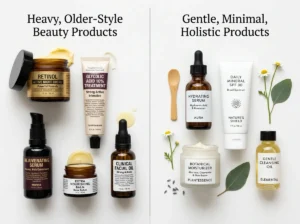
The shift your skin needs during perimenopause is less about adding more products and more about choosing the right ones. This is a season to simplify, nourish, and protect — not to strip or over-treat. The goal is to work in harmony with your skin’s changing biology.
This connects to a principle at the heart of everything we explore here at Beauty Heals You — that true beauty care is also an act of self-healing. Tending to your skin during this transition is not vanity. It is a profound form of self-respect.
Morning Routine: Protect and Hydrate
Start with a gentle, non-stripping cleanser. Foaming cleansers that leave your face feeling squeaky-clean are actively damaging to a perimenopausal skin barrier. Look for cream or gel cleansers with hydrating ingredients like ceramides or glycerin.
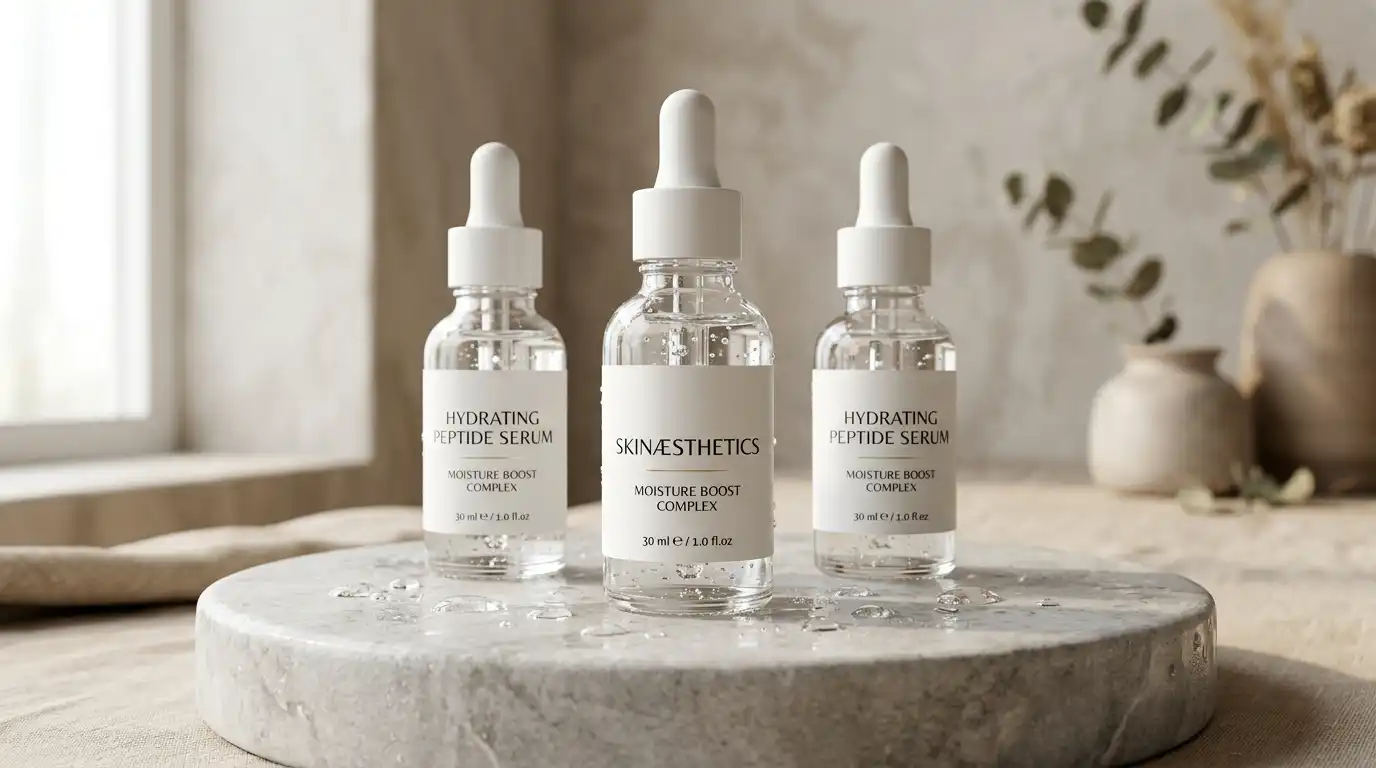
Follow with a hydrating serum containing hyaluronic acid. Because perimenopausal skin struggles to hold onto moisture, layering a humectant-rich serum under your moisturizer significantly boosts hydration levels throughout the day.
Never skip SPF. This is non-negotiable. Sun exposure accelerates collagen loss and worsens the hyperpigmentation that hormonal fluctuations already promote. A mineral sunscreen — zinc oxide or titanium dioxide based — is ideal for sensitive, reactive skin. The American Academy of Dermatology recommends SPF 30 or higher applied daily, even on cloudy days.
Evening Routine: Repair and Renew
Nighttime is when your skin does its most active repair work, and supporting that process matters even more as estrogen declines. After cleansing, incorporate a peptide-rich serum or cream. Peptides signal the skin to produce more collagen, making them one of the most valuable ingredients for perimenopausal skin.
If your skin tolerates it, a low-dose retinol used two to three nights per week can support cell turnover and stimulate collagen. Start slowly — a pea-sized amount of 0.025% retinol — and always follow with a rich moisturizer. Perimenopausal skin is more sensitive than it used to be, and retinol needs to be introduced carefully.
Seal everything in with a nourishing night cream containing ceramides, squalane, or niacinamide. These ingredients strengthen the skin barrier, reduce redness, and help skin hold onto the moisture it needs overnight.
Key Ingredients to Prioritize
When reading product labels, look for these powerhouse ingredients especially suited to perimenopausal skin:
- Hyaluronic acid — deep hydration and plumping
- Ceramides — barrier repair and moisture retention
- Niacinamide — reduces redness, evens tone, supports barrier
- Peptides — collagen stimulation and firming
- Retinol — cell turnover and collagen support (use with care)
- Vitamin C — brightening, antioxidant protection, collagen synthesis
- Squalane — lightweight, deeply nourishing oil that mimics skin’s natural sebum
The Inside-Out Approach to Perimenopausal Skin
No topical routine works in isolation. The foods you eat, the stress you carry, the sleep you get — all of it shows up on your skin. This inside-out approach is something we have explored deeply here on the gut-beauty connection, and it applies powerfully to perimenopausal skin health as well.
Nutrition for Hormonal Skin
Certain foods directly support the skin during hormonal transitions. Omega-3 fatty acids — found in salmon, walnuts, chia seeds, and flaxseed — reduce inflammation and support the skin’s moisture barrier. Phytoestrogen-rich foods like flaxseeds, edamame, and organic soy may also help moderate some hormonal fluctuations, though responses vary individually.
Collagen-supporting nutrients matter too. Vitamin C (found in bell peppers, citrus, and berries) is essential for collagen synthesis, while zinc (in pumpkin seeds, legumes, and lean meats) supports skin healing and sebum regulation. For a deeper look at how nutrition shapes your skin health, we have covered this extensively in a dedicated post.
Stress, Cortisol, and Skin
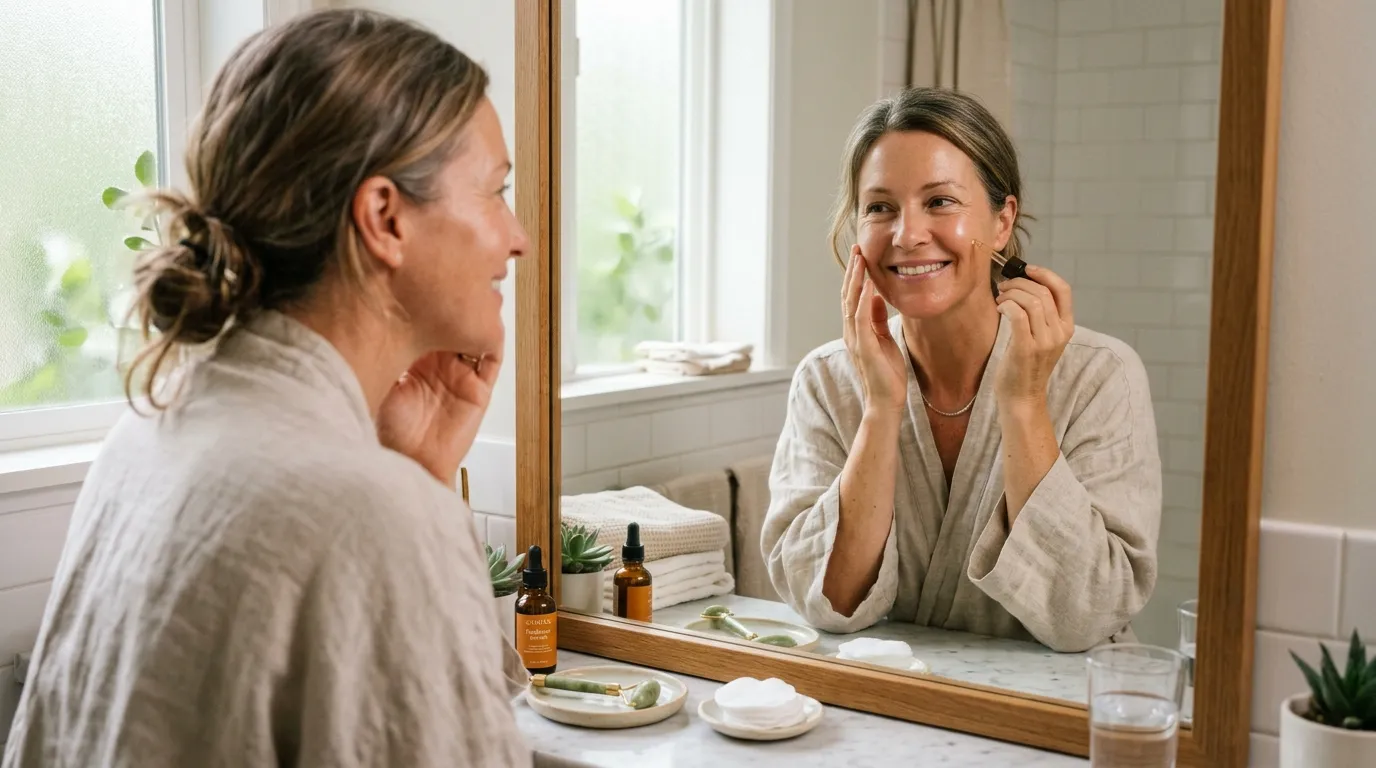
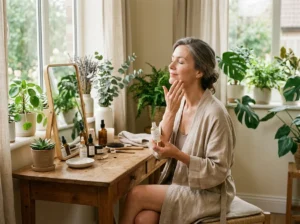
Perimenopause is often a high-stress life season — career pressures, family demands, and the emotional weight of transition all converge. Chronic stress elevates cortisol, which breaks down collagen, worsens inflammation, and triggers breakouts. Beauty rituals, when approached mindfully, become a genuine tool for nervous system regulation. The act of caring for your skin — slowly, intentionally, with warm water and a gentle touch — signals to your body that it is safe.
This is the healing power of beauty that goes far beyond what any serum can deliver. As we explore throughout this site, self-care is one of the most powerful acts of healing available to us.
When to See a Professional
While a well-chosen at-home routine can do remarkable things, perimenopausal skin sometimes benefits from professional support. A licensed esthetician can assess your skin’s specific concerns and create a customized treatment plan that addresses collagen loss, pigmentation, sensitivity, and hydration at a deeper level than home care alone.
Some women also find meaningful relief through conversations with their OB-GYN or a hormone specialist about hormone replacement therapy (HRT) or other medical options. HRT has been shown in studies to improve skin hydration, elasticity, and thickness — making it a consideration worth exploring with a trusted healthcare provider. The Menopause Society offers guidance on hormone therapy options and their effects on skin and overall health.
The most important thing is that you do not navigate this transition alone, or in silence. Perimenopause is not a problem to be endured — it is a season to be understood and supported, with both the right tools and the right community around you.
You Deserve to Feel Beautiful in This Season Too
There is something quietly radical about choosing to care for yourself with intention during perimenopause. In a culture that has historically treated midlife women as invisible, reclaiming your skin — and by extension, your sense of self — is an act of both healing and resistance.
Your skin is changing. That is true. But changing does not mean declining. With the right routine, the right nourishment, and the right mindset, this can be the season where you feel most deeply at home in your body — glowing from the inside out, exactly as you are.
If you are ready to explore what a personalized, holistic approach to your beauty and wellness could look like, beauty coaching at Beauty Heals You is designed exactly for women in transition — helping you reconnect with yourself and build practices that truly heal.